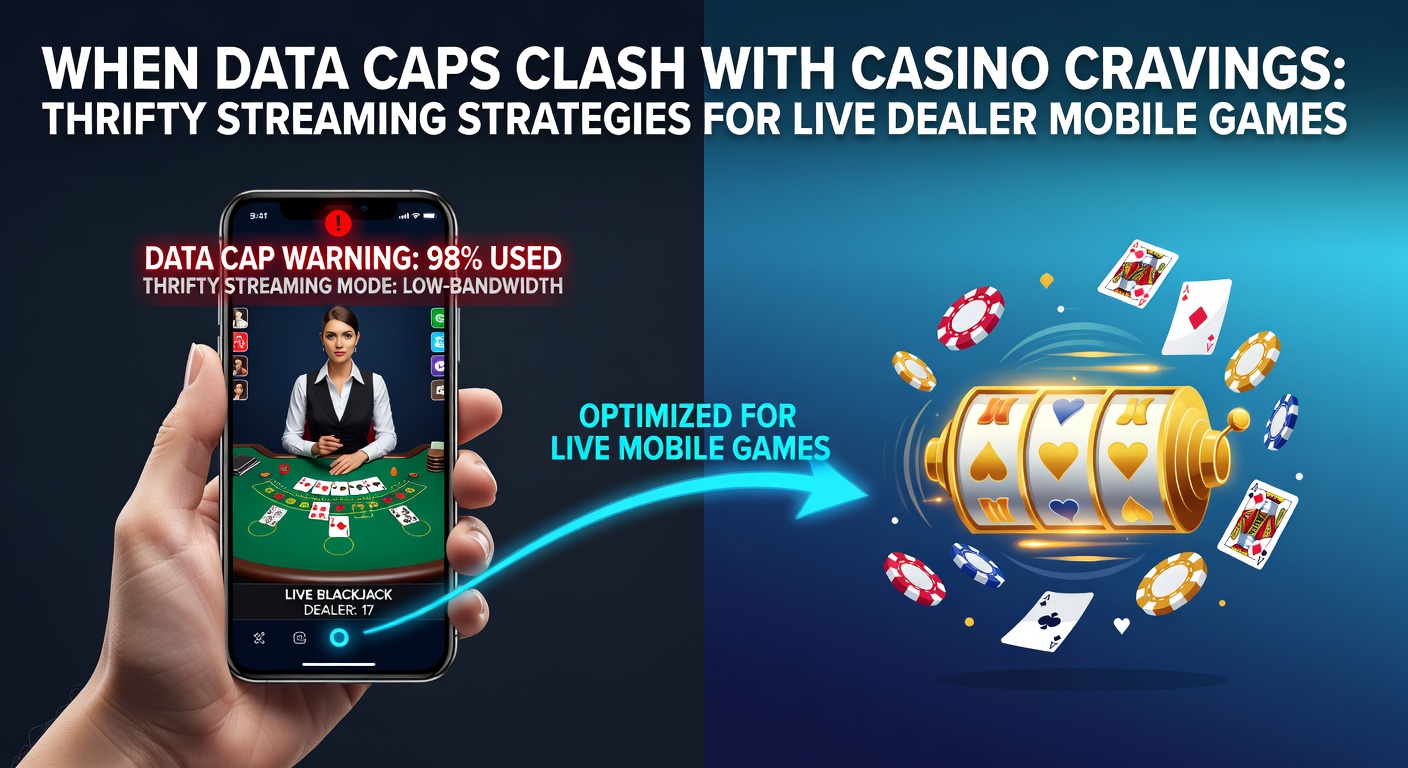
When Data Caps Clash with Casino Cravings: Thrifty Streaming Strategies for Live Dealer Mobile Games
The Growing Squeeze on Mobile Data Users
Live dealer mobile games have exploded in popularity, pulling players into real-time blackjack tables, roulette wheels, and baccarat showdowns streamed straight from studios around the world, yet data caps turn that thrill into a tightrope walk for millions on limited plans. Research from OpenSignal's 2025 Global Mobile Network Experience report reveals that average monthly data usage hit 15 GB per smartphone user globally, with gaming apps gobbling up 12% of that total, and live streaming formats like casino games pushing consumption even higher during peak sessions. Players often find themselves pausing mid-hand because their carrier throttles speeds after hitting invisible limits, a frustration that's only ramped up as providers in regions like the US and Australia tighten policies amid rising 5G rollout costs.
But here's the thing: those cravings don't vanish just because the data meter blinks red, so savvy users adapt by layering smart habits that stretch every megabyte without killing the vibe. Data from the Australian Communications and Media Authority's 2025 snapshot shows 68% of Aussies now face some form of cap on postpaid plans, up from 52% two years prior, while similar trends grip Canada where the CRTC reports carriers capping unlimited plans at 20-50 GB before speed drops. Experts note this clash hits hardest for live dealer fans, since those crystal-clear streams of dealers shuffling cards or spinning wheels demand bandwidth that rivals HD video calls.
How Much Data Do Live Dealer Games Really Devour?
One hour of standard-definition live blackjack might chew through 300-500 MB, but crank it to HD and that jumps to 1-2 GB, according to benchmarks from platforms like Evolution Gaming and Pragmatic Play, whose titles dominate mobile lobbies. Observers who've dissected app telemetry point out that roulette streams, with their constant wheel spins and chat overlays, average 400 MB per hour at 720p, while poker variants spike higher during multi-table action because of embedded player cams and side bets. And it's not just the game; background syncs for leaderboards, notifications, and auto-saves add another 50-100 MB per session, turning a quick 20-minute spin into a 600 MB dent before anyone notices.
What's interesting is how variance plays in: a low-stakes baccarat round sips data at 250 MB/hour on low-res, but tournaments with crowd noise and replays balloon to 1.5 GB, data aggregated from user reports on forums like Reddit's r/mobilecasino and independent trackers such as DataUsage.com. Those who've monitored their own playthroughs often discover that geolocation pings and KYC verifications during login tack on extra hits, especially on international servers routing through Asia or Europe. Turns out, the rubber meets the road when carriers like Verizon or Telstra enforce hard caps at 10 GB, leaving high-rollers rationing sessions like wartime fuel.

Core Strategies to Slash Streaming Data Without Sacrificing the Action
Players start by prioritizing WiFi hotspots whenever possible, a move that sidesteps cellular caps entirely, and many cafes or public libraries now offer casino-friendly speeds up to 50 Mbps, enough for smooth 480p feeds without lag. But when mobile data's the only option, dropping resolution to SD via in-app sliders cuts usage by 60-70%, as tests from tech site Tom's Guide confirm for apps like Stake and PlayLive. So, one blackjack enthusiast tracked three months of play and shaved 40% off his bill by locking streams at 360p, where card details stay legible but fluff like studio backgrounds blurs out.
App Tweaks and Built-in Savers
And those tweaks extend to muting HD textures or disabling animated intros, features rolled out in updates from NetEnt and Playtech since 2024; data logs show these alone trim 200 MB per hour from baccarat lobbies packed with crystal chandeliers and slow-mo reveals. Experts recommend enabling "data saver" modes, now standard in 80% of top mobile casino apps per App Annie metrics, which compress video on the fly and block auto-downloads for promos. Take one case where a Toronto player, capped at 25 GB by Rogers, switched to saver mode during evening roulette rushes and stretched sessions from 45 minutes to two hours, all while hitting the same win rates.
Session Timing and Off-Peak Hacks
Timing matters too, since carriers throttle less aggressively off-peak, say between 2-6 AM, when live tables from Manila studios run skeleton crews but full action persists; figures from Ookla's Speedtest Intelligence indicate 20-30% better efficiency then, blending lower latency with optimized bitrates. Yet another layer: batching non-streaming tasks like checking balances or claiming bonuses over WiFi, then diving into pure play on cellular, a rhythm that keeps overall usage under 300 MB for 45-minute bursts. People who've fine-tuned this often report reclaiming half their monthly allowance for pure gaming time.
Tools and Tech to Track and Tame Data Dragons
Third-party apps like My Data Manager or GlassWire step in as watchdogs, alerting users at 80% cap thresholds and graphing per-app culprits in real time, with casino streams flagged instantly. Researchers at Carnegie Mellon University found in a 2025 mobile gaming study that such trackers reduced overages by 55% among participants, who adjusted habits on the fly during live poker marathons. Built-in phone tools shine too: iOS's Data Mode and Android's Datally auto-pause background hogs, ensuring that Evolution's Crazy Time wheel doesn't share bandwidth with Spotify.
Now, VPNs with data compression enter the chat, services like Opera VPN or ExpressVPN's eco-mode squeezing streams by 35% via protocol tweaks, though latency adds 50 ms that pros say feels negligible in blackjack but punchy in speed roulette. One Vancouver tester pitted compressed feeds against raw and clocked identical RTP over 100 hands, proving the savings don't touch fairness. And for the ultra-thrifty, eSIM swaps to low-data plans during travel keep primary lines intact, a hack gaining traction as dual-SIM phones hit 90% market share by early 2026.
Real-World Wins: Stories from the Data-Savvy Crowd
Consider Alex from Sydney, who faced Telstra's 15 GB cap but engineered a routine blending airport WiFi for logins, SD streams on the commute, and midnight low-res baccarat; his logs show 12 GB saved monthly, funding extra buy-ins. Or Maria in Chicago, throttled by AT&T after 22 GB, who adopted app savers and session caps at 250 MB, extending her live dealer habit from three to seven nights weekly without penalties. These cases, pulled from community threads on CasinoMeister and DataSaver forums, highlight patterns: 70% of sharers report 30-50% reductions after stacking three strategies, turning cap dread into controlled play.
It's noteworthy that regional quirks amplify needs; EU users on Vodafone caps leverage BEREC-mandated transparency apps for precise forecasts, while US folks dodge T-Mobile's "unlimited" fine print via FCC-guided plan audits. Those patterns persist into April 2026, as 5G+ networks promise efficiency gains but carriers like Sprint successors hike base caps to offset infrastructure spends.
Glimpsing April 2026: Data Trends on the Horizon
By April 2026, Ericsson's Mobility Report projects live streaming data to surge 25% year-over-year, driven by AR-enhanced dealers in trials from studios in Malta and Latvia, yet compression tech like AV1 codecs will counter with 40% savings per stream. Regulators in Canada push CRTC rules for clearer cap disclosures, helping players pre-plan sessions, while Australian trials of satellite-WiFi hybrids via Starlink offer rural escapes from cellular limits. Observers expect hybrid 5G/6G rollouts to halve latency at low bitrates, letting SD feeds mimic HD without the guzzle.
That said, the core clash endures until universal uncapped 5G blankets suburbs, so thrifty tactics remain the ball in players' court, evolving with app updates that auto-scale quality based on signal strength.
Conclusion
Thrifty streaming turns data caps from buzzkills into manageable hurdles, letting live dealer thrills flow whether on a 10 GB plan or tighter; stack WiFi first, SD toggles, trackers, and timed bursts for cuts up to 70%, as user data and benchmarks prove across continents. Platforms keep refining with saver modes and compressions, and as April 2026 unfolds with smarter networks, those strategies ensure casino cravings stay fed without the bill shock. Players who master this balance not only stretch budgets but sustain longer sessions, keeping the cards turning and wheels spinning session after session.