Tracing the Evolution of Touch Interface Innovations in Modern Mobile Slot Designs
Touch interface development in mobile slot designs traces back to the introduction of capacitive screens in consumer devices around 2007, when the first iPhone enabled precise finger-based interactions that replaced stylus inputs common in earlier PDAs. Slot developers quickly adapted basic tap mechanics to trigger reel spins, while data from device manufacturers showed adoption rates climbing as users shifted from physical keypads to gesture controls. Those early implementations relied on single-point detection, limiting options to simple presses that registered bets and activated play sequences without additional layers of input recognition.
Initial Gesture Adaptations in the Late 2000s
By 2009 several software providers incorporated swipe motions to control virtual reels, allowing players to drag symbols across the screen in patterns that mirrored physical lever pulls on traditional machines. Research from device analytics firms indicated that swipe accuracy improved through software updates that compensated for screen size variations across Android and iOS platforms, while multi-touch capabilities in newer hardware permitted simultaneous adjustments to wager amounts using two fingers. Observers note that these changes coincided with increased processing power in handsets, which handled the additional calculations required for smooth animations without lag during extended sessions.
Expansion Through Accelerometer and Haptic Integration
The early 2010s brought accelerometer integration that let users tilt devices to influence reel behavior or trigger bonus features, with studies from hardware testing labs confirming that tilt sensitivity thresholds reduced accidental activations when calibrated properly. Haptic feedback arrived shortly afterward through vibration motors that delivered distinct pulses for wins, near-misses, and button presses, creating tactile confirmation that complemented visual cues. Figures from mobile operating system updates reveal that developers standardized vibration patterns across applications, ensuring consistent responses whether users operated on tablets or smaller phone displays. This period also saw pinch-to-zoom functions applied to paytable views and reel enlargements, enabling detailed inspection of symbol combinations without navigating separate menus.
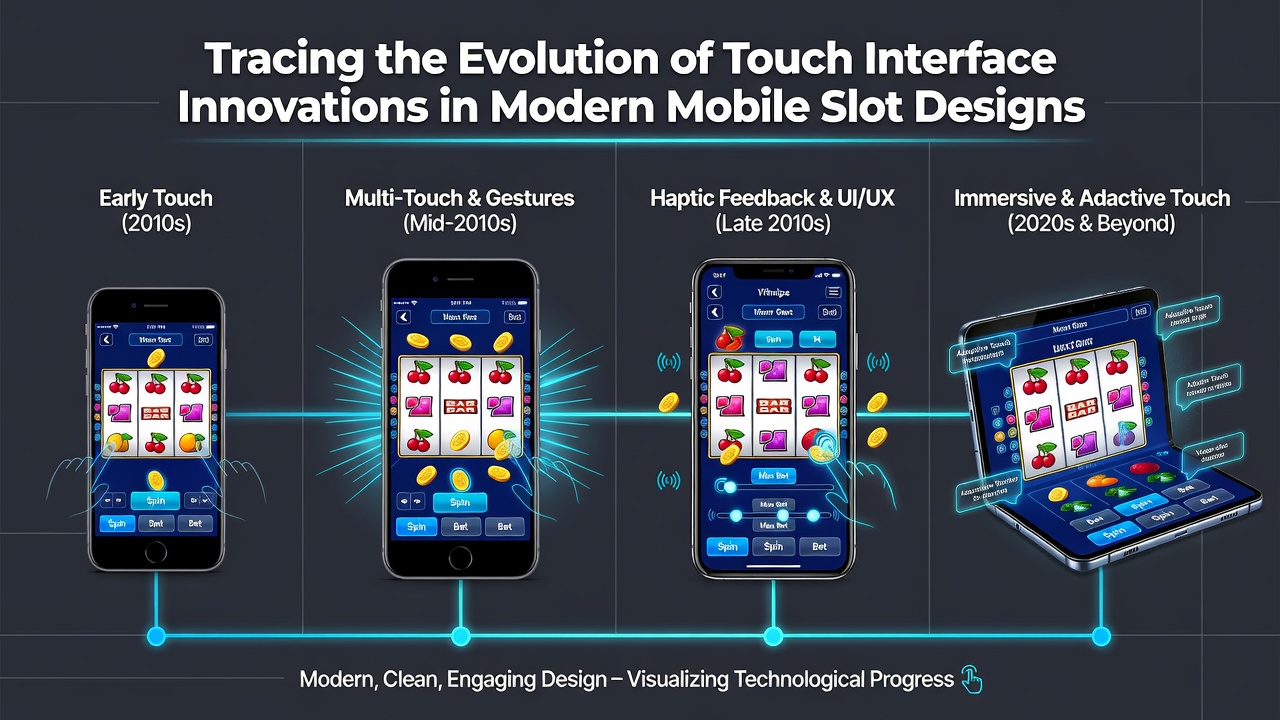
What's interesting is how these combined inputs reduced reliance on on-screen buttons alone, freeing display space for larger reel areas. In August 2026 platform reports highlighted continued refinement of pressure-sensitive touch layers that distinguished light taps from firmer presses, opening pathways for variable bet sizing within a single gesture sequence.
Multi-Platform Synchronization and Gesture Refinements
Cross-device continuity emerged as a focus once cloud-based account systems matured, allowing touch preferences and gesture calibrations to transfer between phones and tablets through synchronized profiles. Industry organizations such as the European Gaming and Betting Association documented how standardized APIs supported consistent swipe velocities and rotation angles regardless of hardware differences. Those who've examined user interaction logs find that developers introduced custom gesture libraries permitting diagonal drags or circular motions to activate specific bonus rounds, while maintaining backward compatibility with basic taps for accessibility.
Researchers discovered that incorporating edge-to-edge swipe zones expanded control options on bezel-less screens introduced after 2018, and data from device adoption surveys showed corresponding increases in session durations as navigation became more intuitive. Yet hardware variations still required ongoing adjustments, particularly when new foldable phones entered markets and demanded interface scaling across multiple display orientations.
Current Developments and Sensor Fusion Approaches
Recent designs fuse touch inputs with additional sensors including gyroscopes and proximity detectors, enabling context-aware responses such as pausing reels when a device detects a hand covering the screen. A report from the Canadian Radio-television and Telecommunications Commission noted regulatory interest in how these sensor combinations affect fair play verification processes. Multi-finger chord gestures now support complex actions like simultaneous stake increases and auto-play activation, with testing protocols confirming reduced error rates compared to sequential menu selections.
Voice-assisted touch combinations have also appeared in select titles, where spoken commands supplement rather than replace physical gestures, maintaining the tactile foundation established over the preceding decade. Observers note that these layered systems require precise calibration to avoid conflicts between input methods, particularly in environments with ambient noise or variable lighting conditions that affect sensor reliability.
Conclusion
Touch interface progress in mobile slot designs reflects cumulative hardware and software advancements that began with basic capacitive detection and expanded through gesture libraries, haptic responses, and sensor fusion. Data indicates continued iteration as new device form factors reach consumers, while established patterns of swipe, tilt, and multi-point interactions remain central to gameplay mechanics. Those tracking development timelines recognize that each innovation builds on prior standards, preserving accessibility across diverse user groups and device specifications.