Smartphone Sensor Data and Its Role in Personalizing No-Deposit Bonus Offers
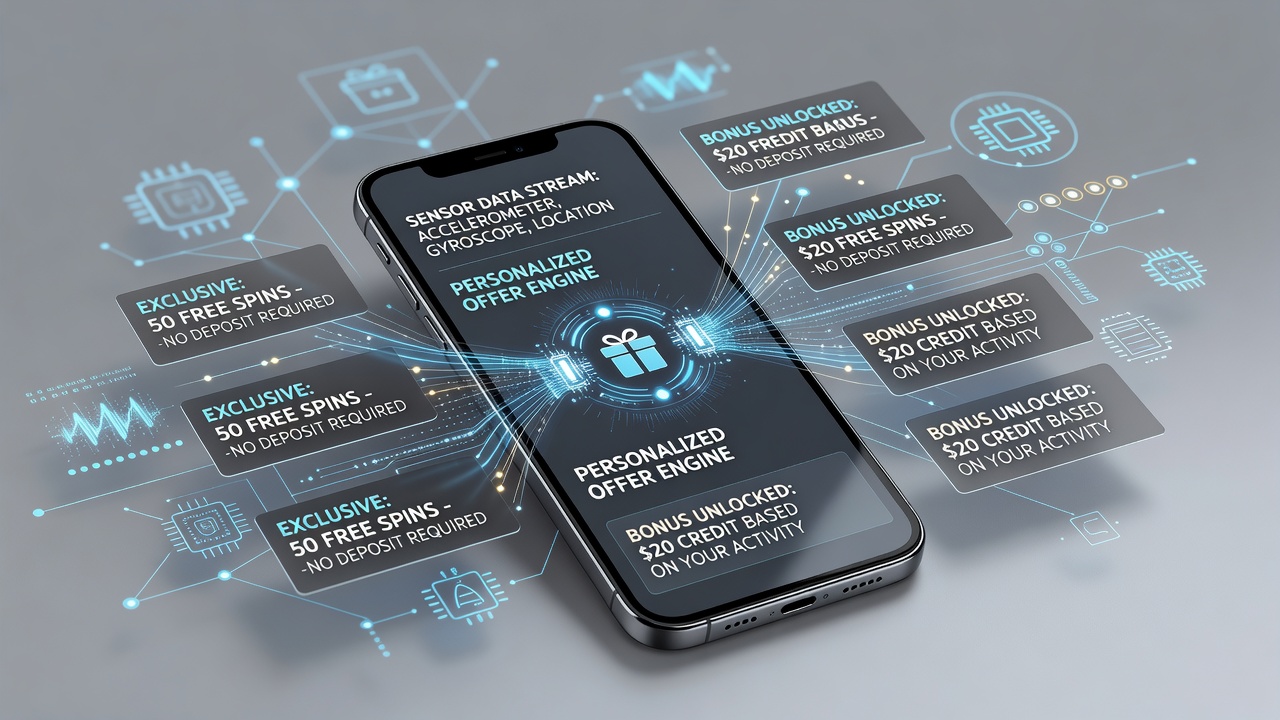
Smartphone sensors collect a range of movement, location, and environmental data that operators use to tailor no-deposit bonus offers for mobile gaming platforms. Accelerometers, gyroscopes, GPS modules, and ambient light sensors generate continuous streams of information about user behavior and context, and this data feeds directly into personalization algorithms that adjust bonus amounts, game recommendations, and eligibility windows.
Sensor Types and Data Collection Methods
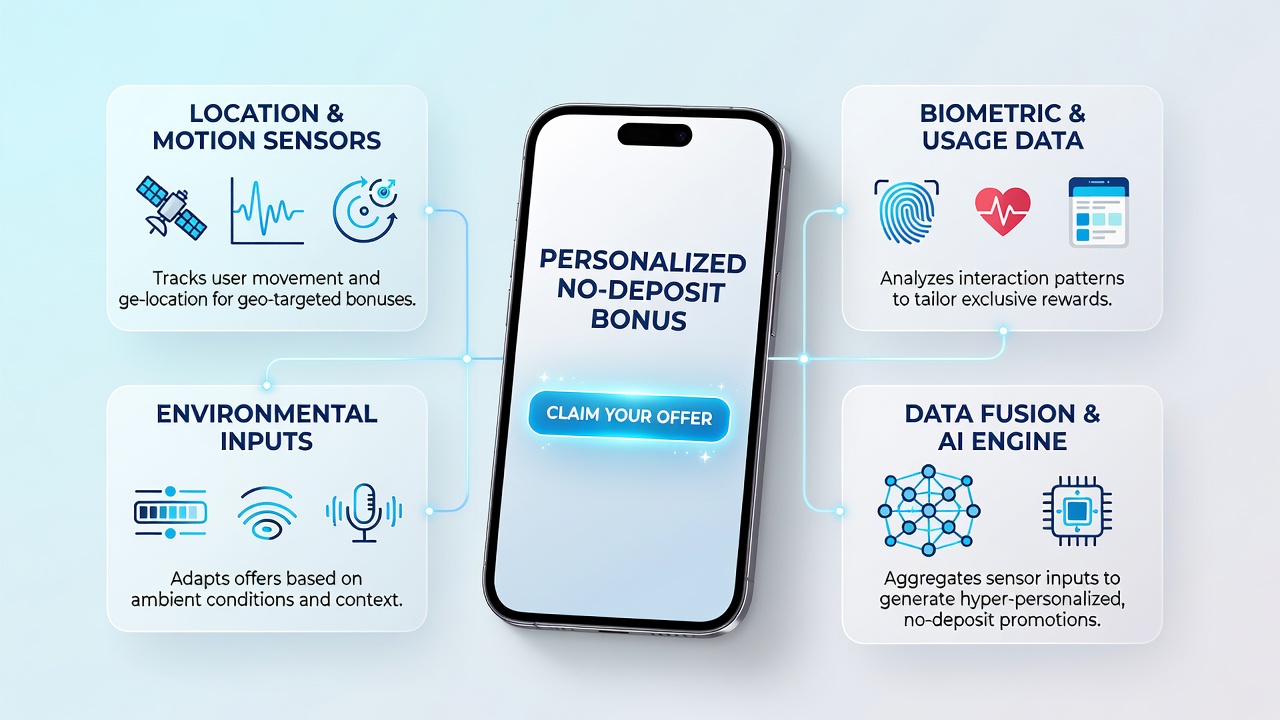
Modern smartphones contain multiple built-in sensors that operate without user intervention once permissions are granted. The accelerometer tracks device movement and orientation while the gyroscope measures rotational changes, and together these components help identify whether a player is stationary, walking, or traveling in a vehicle. GPS provides precise location coordinates that reveal proximity to certain venues or regions with specific regulatory rules, whereas magnetometers and barometers add altitude and directional context that refines location accuracy further.
Operators receive anonymized sensor readings through app SDKs that sample data at intervals ranging from several times per second during active sessions to once every few minutes during background operation. Research from the University of California indicates that such sampling rates allow systems to detect patterns like commuting routines or evening leisure periods with over 85 percent accuracy in controlled tests.
Personalization Algorithms in Action
Algorithms process sensor data to segment users into behavioral cohorts that receive customized no-deposit bonuses. A player whose accelerometer data shows frequent short bursts of activity during lunch hours might receive smaller, quick-play bonuses valid for thirty minutes, whereas someone whose GPS logs indicate regular evening sessions at home could see larger bonuses tied to longer-duration slot titles. These adjustments happen in real time as fresh sensor inputs arrive, and the system recalibrates offer parameters without requiring manual updates from marketing teams.
Integration with Geolocation and Regulatory Compliance
Geolocation data from smartphone sensors intersects directly with state and provincial gaming regulations that restrict access based on physical location. In July 2026 several North American jurisdictions expanded geofencing requirements that force apps to verify user position within approved boundaries before any no-deposit bonus activates. Sensor fusion techniques combine GPS with Wi-Fi and cellular signals to maintain accuracy even when satellite reception weakens indoors, and this approach helps platforms stay compliant while still delivering timely offers.
Canadian regulators through the Alcohol and Gaming Commission of Ontario have published guidelines that require explicit disclosure of sensor data usage in privacy policies, and similar transparency measures appear in draft rules from the Australian Communications and Media Authority. These frameworks emphasize user consent and data minimization, yet they still permit operators to leverage sensor insights for offer personalization when users opt in.
Behavioral Pattern Recognition and Offer Timing
Longitudinal analysis of sensor streams reveals recurring activity signatures that influence bonus scheduling. One study released by the National University of Singapore examined six months of anonymized mobile gaming logs and found that users whose devices registered consistent evening stillness patterns responded to no-deposit offers at rates 22 percent higher than those with irregular movement profiles. Platforms apply similar findings to time bonus notifications for periods when sensor data predicts higher engagement likelihood, and they reduce offer frequency during detected travel or high-motion periods when attention may be divided.
Ambient light sensors further refine timing by indicating whether a device is in a dark or brightly lit environment, which correlates with different session lengths in aggregated datasets. Operators adjust bonus validity periods accordingly so that offers remain relevant to the detected context without requiring additional user input.
Privacy Safeguards and Industry Standards
Industry groups such as the European Gaming and Betting Association have developed voluntary standards that limit sensor data retention to thirty days for personalization purposes unless users grant extended consent. Encryption protocols protect data in transit and at rest, while differential privacy techniques add statistical noise that prevents individual identification from aggregate datasets. These measures address concerns raised by data protection authorities in multiple regions and allow continued use of sensor-driven personalization under stricter oversight.
Conclusion
Smartphone sensor data enables precise, context-aware personalization of no-deposit bonus offers by supplying real-time movement, location, and environmental signals that algorithms translate into tailored rewards. Regulatory developments through mid-2026 continue to shape how operators collect and apply this information while maintaining compliance across jurisdictions. As sensor capabilities advance and data processing methods mature, the scope of personalization expands without altering the fundamental requirement that users retain control over their information.