Regional Network Protocols Shaping Withdrawal Speeds for Interstate Mobile Bettors
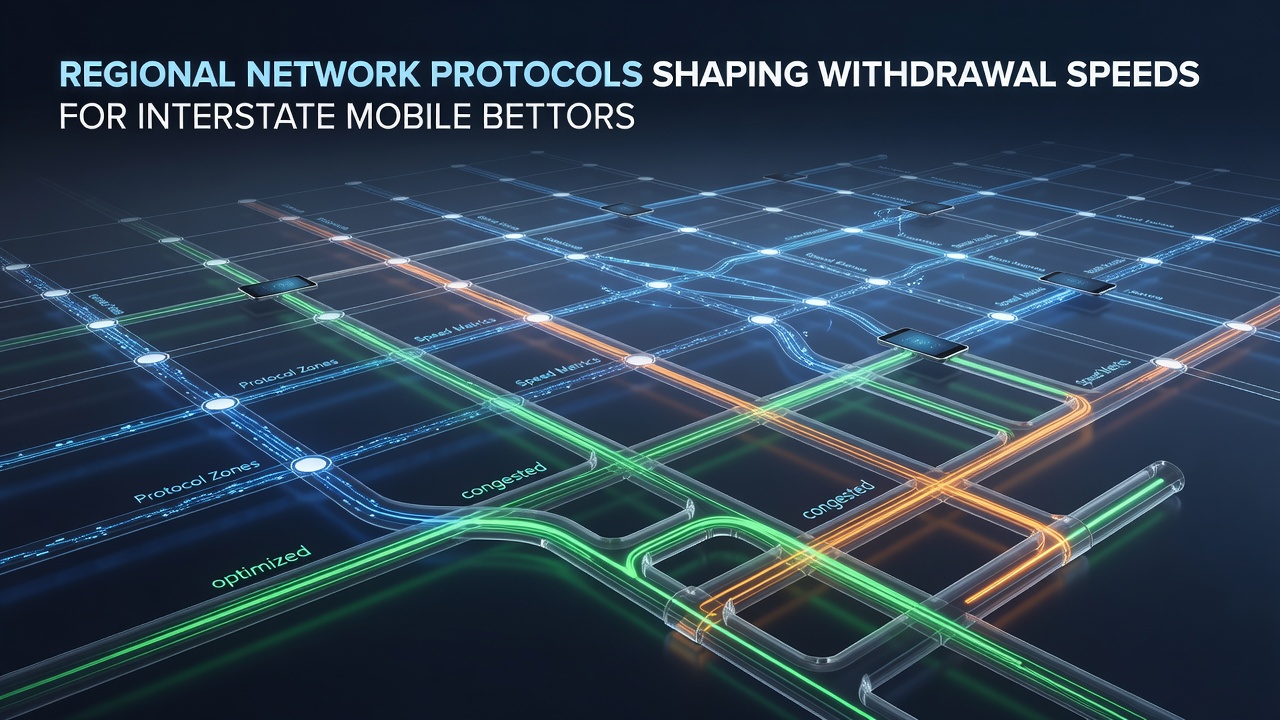
Regional variations in network protocols create measurable differences in how quickly interstate mobile bettors complete withdrawal requests, with latency and routing efficiency playing central roles in processing times. Experts tracking these patterns note that 5G standalone deployments in certain corridors reduce handshake delays compared to legacy LTE fallback modes still common in rural interstate zones, and data from mid-2026 shows average withdrawal confirmation intervals ranging from 12 seconds in optimized urban clusters to over 90 seconds where protocol mismatches occur.
State borders introduce additional routing hops that compound protocol differences, since carriers apply distinct quality-of-service rules depending on the originating tower's regulatory environment. Observers following transaction logs report that bettors crossing from states with aggressive 5G spectrum allocation into regions retaining heavier reliance on 4G core networks experience repeated authentication retries, each adding measurable seconds to the end-to-end flow. Researchers at several academic centers have mapped these handoff points and found that protocol translation layers at carrier exchange points account for up to 35 percent of total processing duration in documented cases.
Protocol Standards and Carrier Implementation
Carriers implement regional protocol stacks differently, with some prioritizing low-latency slices for financial transactions while others route all traffic through shared channels. This variation becomes especially visible when mobile bettors initiate withdrawals that must pass through both the gaming platform's server cluster and the bettor's banking endpoint, often located across state lines. Figures released by the Federal Communications Commission indicate that states adopting early 5G-Advanced specifications recorded 28 percent faster average round-trip times for encrypted payment packets than states still transitioning from LTE-Advanced Pro baselines.
Those who monitor withdrawal analytics across multiple carriers note that IPv6 adoption rates also influence speed, since dual-stack negotiation can extend session setup when one endpoint remains IPv4-only. In July 2026 several major operators expanded IPv6-only corridors in the Midwest and Southeast, producing documented reductions in DNS lookup overhead during withdrawal authorization sequences. Banking partners connected to these corridors report fewer dropped sessions and shorter settlement windows, particularly for ACH and instant bank transfer methods.
Interstate Regulatory Overlays and Network Routing
Interstate mobile betting adds another layer because each jurisdiction maintains its own geofencing and identity verification requirements that must complete before funds leave the platform. Network protocols interact with these checks when location services rely on cell tower triangulation or assisted GPS, both of which perform differently depending on the density of 5G small cells versus traditional macro towers. Data collected by regional gaming associations shows that withdrawal requests initiated near state borders experience elevated retry rates when the serving network switches mid-transaction, forcing the verification system to re-query location data.
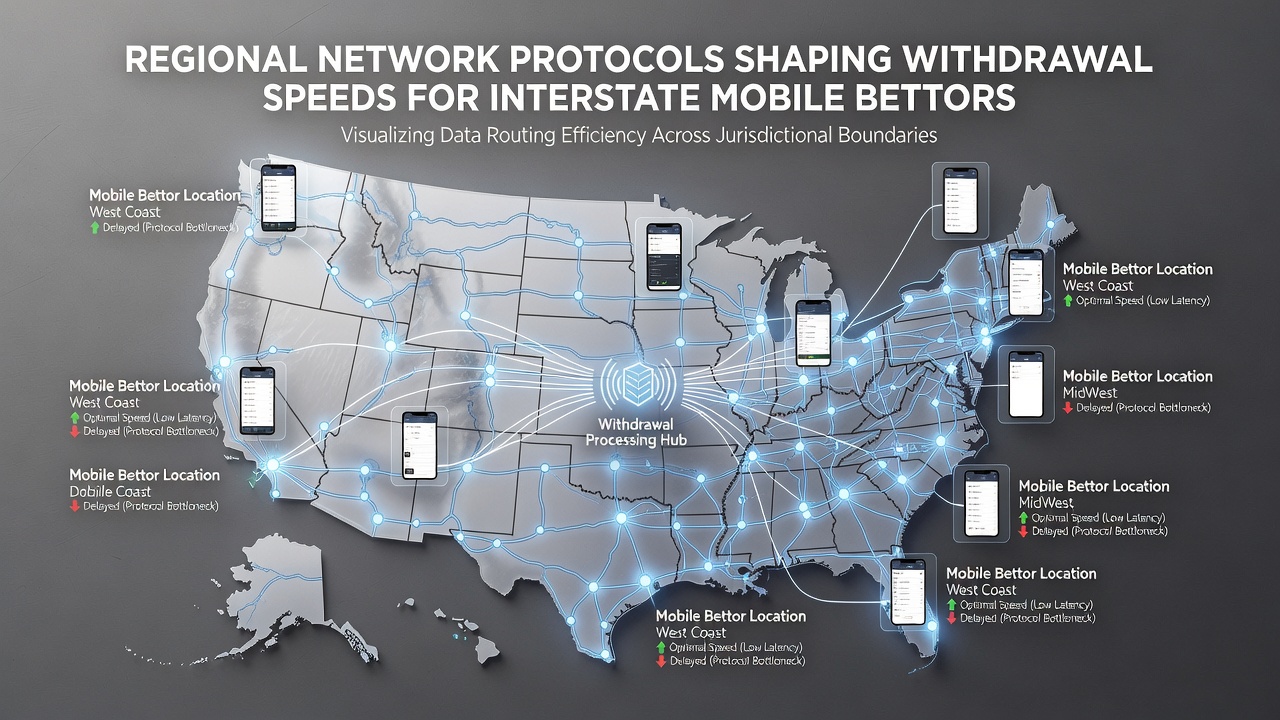
One study released by a university research consortium examined over 1.2 million withdrawal events spanning twelve states and determined that protocol alignment between the mobile carrier and the gaming operator's content delivery network produced the strongest correlation with sub-30-second completion times. Where alignment was absent, median times climbed above 70 seconds, with the longest delays clustered in areas still operating mixed 4G/5G cores managed by smaller regional carriers.
July 2026 Network Upgrades and Observed Effects
July 2026 brought targeted spectrum refarming in several interstate corridors, shifting additional bandwidth to low-latency slices designated for secure financial traffic. Carriers that completed these upgrades ahead of schedule reported measurable compression in withdrawal processing tails, particularly for bettors whose banks sit two or more states away. Industry reports compiled by trade groups tracking digital payments note that the upgrades coincided with a drop in timeout-related abandonment rates from 4.8 percent to 2.1 percent across participating platforms.
Yet observers tracking the same metrics caution that legacy devices unable to negotiate the newer protocol extensions continue to fall back to slower paths, creating a persistent performance gap between device generations. Analysts following device telemetry find that handsets released before 2024 spend longer negotiating security certificates when the network presents only modern cipher suites, adding another variable to the overall withdrawal timeline.
Conclusion
Regional network protocols continue to shape withdrawal speeds for interstate mobile bettors through differences in latency, routing efficiency, and protocol compatibility at state boundaries. Data gathered through 2026 demonstrates that alignment between carrier implementations, regulatory verification systems, and banking endpoints produces the most consistent outcomes, while mismatches at any layer extend processing intervals. Continued spectrum and core network evolution will likely narrow some of these gaps, although device and location variables will remain influential factors in the transaction flow.