
Regional Banking Nuances Affecting Instant Payouts in Licensed Mobile Gambling Apps
Regional banking systems create distinct pathways for instant payouts in licensed mobile gambling apps, where settlement protocols, verification layers, and cross-border rules intersect with gambling-specific compliance requirements. Licensed operators must align app features with local payment rails such as the Automated Clearing House network in the United States or the Single Euro Payments Area infrastructure across participating European countries, each carrying its own timing constraints and documentation thresholds that directly shape withdrawal speeds for users.
Core Banking Differences Across Jurisdictions
Observers note that the United States operates under a decentralized model where individual states enforce separate banking integration standards for gambling apps, whereas the European Union applies harmonized instant payment directives that mandate same-day or near-real-time transfers in many cases. In states like New Jersey and Pennsylvania, operators integrate with state-chartered banks that require additional anti-money laundering checks before releasing funds, often extending processing beyond the advertised instant window when transaction volumes spike during peak hours. Data from the Federal Reserve shows that ACH transfers typically clear within one to three business days, yet licensed apps have adopted push-to-debit solutions that bypass traditional rails for verified accounts, reducing average payout times to under thirty minutes in compliant scenarios.
European markets present a contrasting picture where the Revised Payment Services Directive enables direct bank-to-bank instant credits, allowing apps licensed in Malta or Gibraltar to route withdrawals through participating institutions without intermediary holds. Yet regional nuances persist because individual member states layer additional identity verification steps that can delay even these accelerated flows when users cross borders or maintain accounts in multiple currencies.
Verification Processes and Settlement Timelines
Licensed mobile gambling platforms encounter varied know-your-customer mandates that influence how quickly banking partners release funds. Australian operators, for instance, must reconcile payouts against the National Consumer Credit Protection framework, which imposes stricter source-of-funds reviews for larger withdrawals compared with Canadian provincial systems that permit faster approvals once initial account linkage completes. Research from industry reports indicates that apps operating under multiple licenses frequently maintain region-specific payment processors to avoid mismatches between local banking calendars and gambling payout windows.
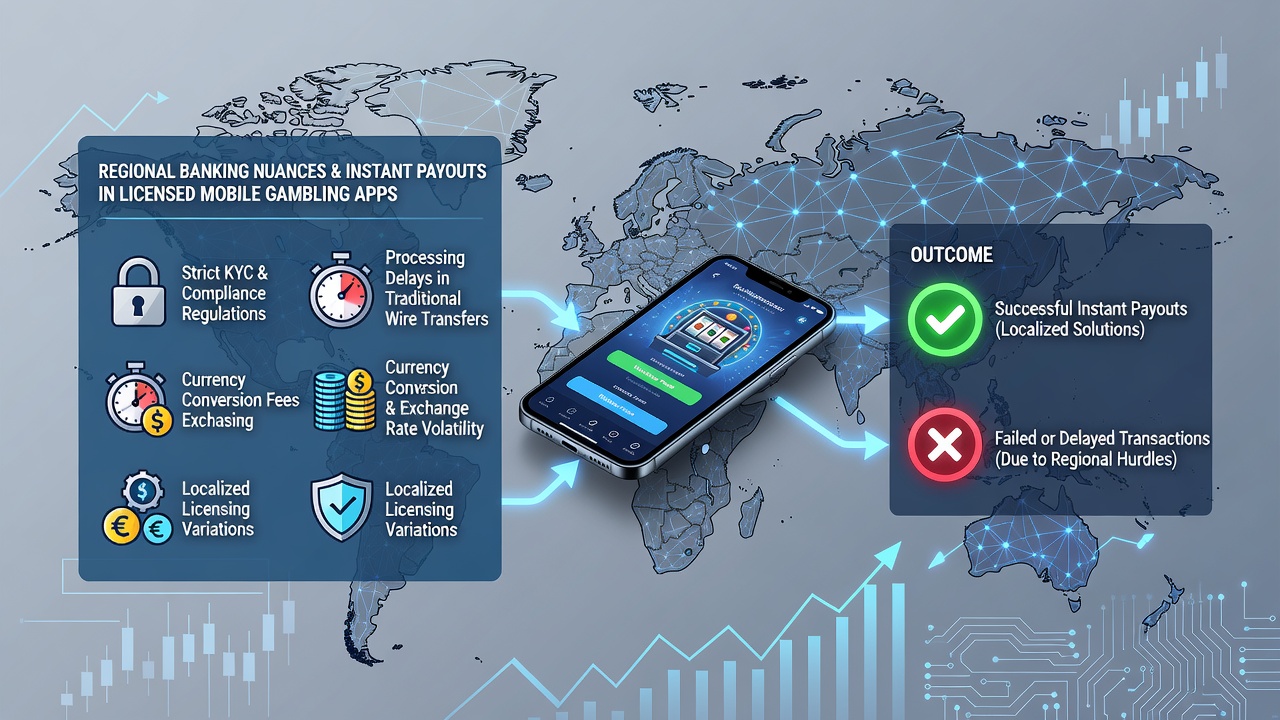
As of August 2026, several North American and European jurisdictions have updated their instant payment frameworks to accommodate higher-volume gambling transactions, yet implementation timelines differ sharply. Canadian banks in Ontario have rolled out real-time rails that integrate directly with licensed apps, whereas certain U.S. state regulators continue to require manual reconciliation for amounts exceeding daily thresholds, creating pockets where instant claims remain conditional rather than guaranteed.
Cross-Border and Currency Considerations
Apps serving international users face additional friction when regional banking rules intersect with currency conversion requirements. Transfers involving the Australian dollar or Canadian dollar often encounter settlement pauses tied to local banking hours, whereas euro-denominated accounts benefit from continuous instant payment availability under European systems. Observers note that licensed operators address these gaps by offering users region-matched payment methods, such as local e-wallets or bank transfers that mirror domestic settlement norms and reduce the incidence of rejected or delayed payouts.
Industry associations have documented how differences in weekend and holiday processing further complicate instant payout promises. U.S. banks typically pause ACH activity over federal holidays, while European instant payment networks maintain availability, forcing multi-jurisdictional apps to display conditional timelines that vary by user location and chosen withdrawal method.
Technological Adaptations by Licensed Operators
Operators respond to these banking nuances through modular payment architectures that switch between local rails based on user jurisdiction and account verification status. This approach allows apps to deliver near-instant results where regulations permit while routing other requests through longer-settlement channels without violating licensing conditions. Data indicates that successful implementations correlate with partnerships between gambling platforms and regional banking technology providers who specialize in gambling-compliant transaction monitoring.
Those who have studied payout performance across markets find that transparency features, such as real-time status updates within the app, help manage user expectations when regional banking constraints extend processing beyond the instant label. These updates draw directly from banking partner APIs rather than internal estimates, ensuring accuracy across different regulatory environments.
Conclusion
Regional banking nuances continue to define the boundaries of instant payout functionality in licensed mobile gambling apps, with settlement rules, verification layers, and operational calendars creating measurable differences in speed and reliability. Operators that map these variations into their payment infrastructure maintain compliance while delivering the fastest possible transfers permitted under each jurisdiction's framework. Ongoing updates to payment systems, including those implemented around August 2026, suggest further convergence in some markets yet sustained divergence in others where state or national banking policies remain distinct.