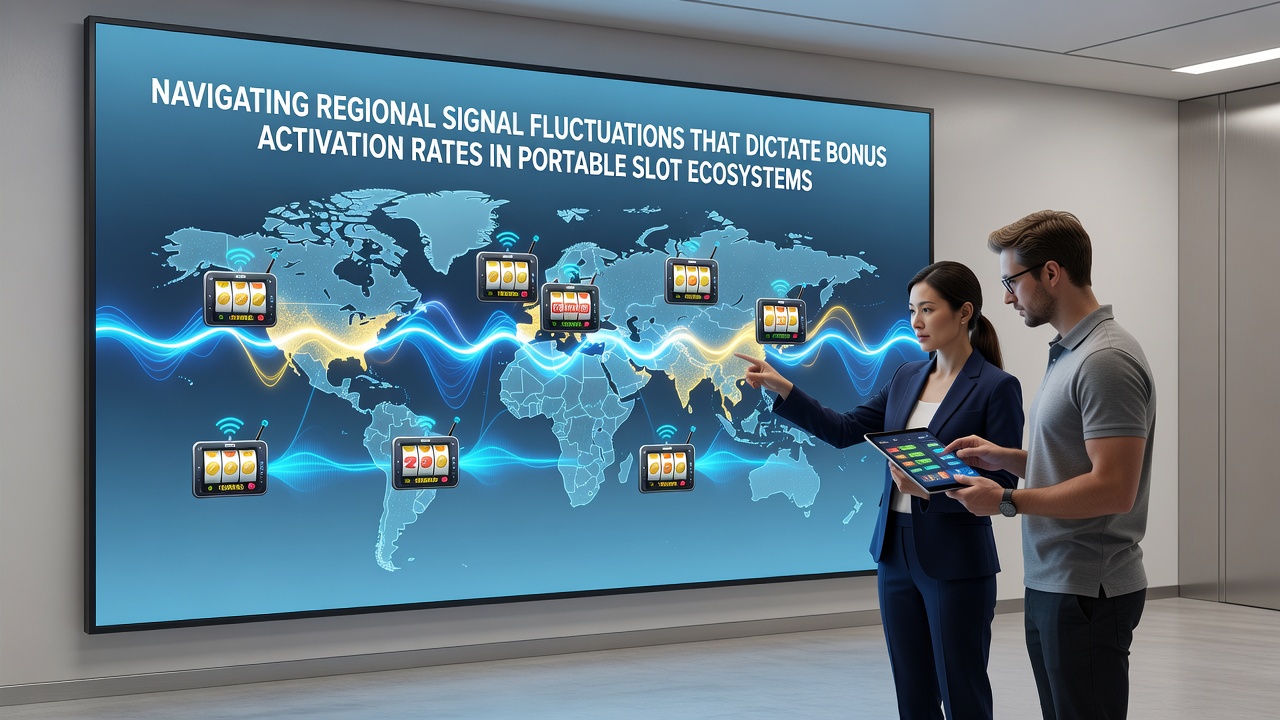
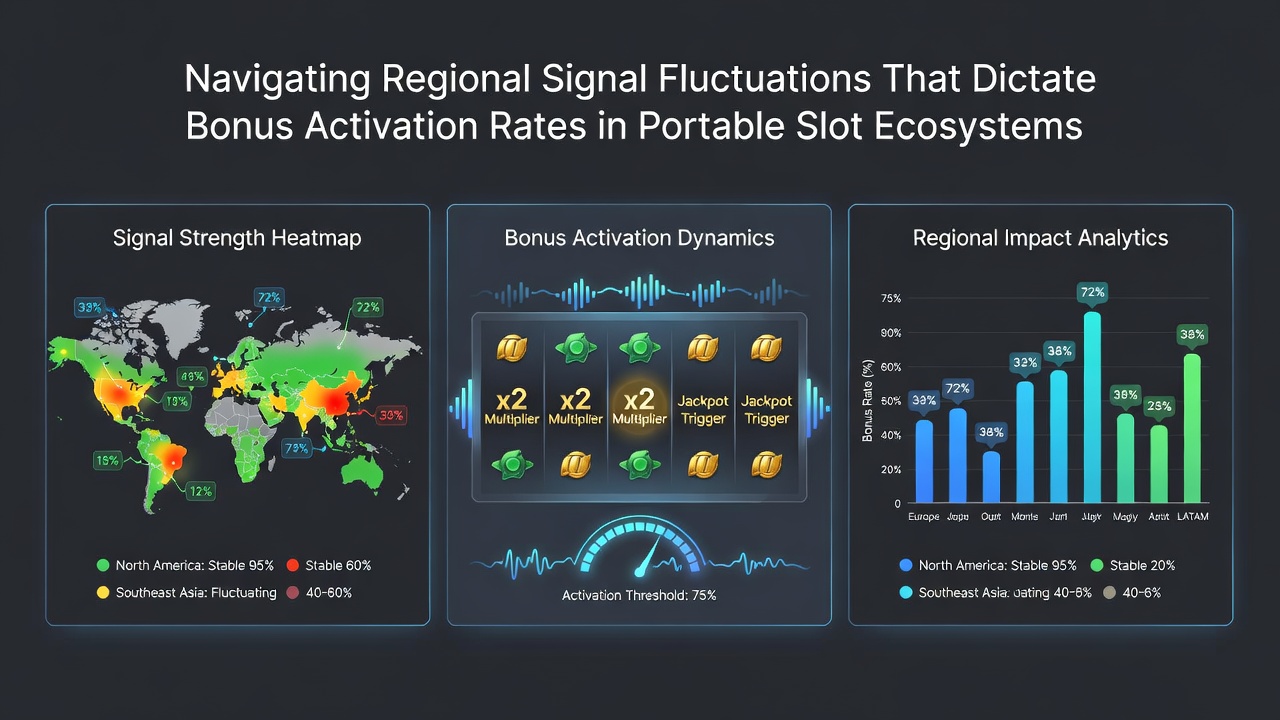
Navigating Regional Signal Fluctuations That Dictate Bonus Activation Rates in Portable Slot Ecosystems
Portable slot ecosystems rely on consistent network connectivity to process bonus activations, yet regional signal fluctuations create measurable differences in how often those triggers succeed. Data from mobile network monitoring services indicate that users in areas with variable tower coverage experience activation delays or failures at rates up to 18 percent higher than those in stable urban zones during peak hours.
Geolocation checks combined with server pings determine whether a bonus offer qualifies under state or provincial rules, and weak signals interrupt that handshake process. Observers note that carriers operating on lower frequency bands maintain steadier connections in rural stretches, while higher frequency 5G deployments drop packets more readily when users move between coverage cells.
Signal Strength Patterns Across Key Markets
August 2026 reports compiled by the Federal Communications Commission highlight persistent coverage gaps in parts of the Midwest and Mountain states, where average download speeds dip below 10 Mbps for extended periods. These conditions correlate with reduced bonus activation success in apps that require real-time verification before crediting free spins or multipliers.
Researchers tracking session logs across multiple platforms found that signal-to-noise ratios below 15 dB frequently coincide with failed trigger attempts, even when the device registers as connected. In contrast, metropolitan corridors served by dense small-cell networks show activation rates that remain above 92 percent across the same time windows.
Technical Factors Behind Activation Variability
Portable slot applications transmit encrypted packets containing user location, account status, and bonus eligibility data to central servers. When regional interference spikes, those packets arrive out of sequence or get dropped entirely, forcing the system to reject the activation request. Network engineers explain that handoff delays between towers add latency spikes of 300 to 800 milliseconds, enough to push some platforms past their internal timeout thresholds.
Studies from academic telecommunications labs reveal that atmospheric conditions such as heavy precipitation or temperature inversions further attenuate signals in specific frequency ranges, producing predictable seasonal dips in activation performance. Operators have responded by implementing fallback protocols that cache eligibility checks locally, yet these workarounds still require an eventual uplink to finalize the bonus credit.
Regulatory and Platform Responses
State gaming regulators in jurisdictions such as New Jersey and Pennsylvania now require operators to log signal-related failures separately from other technical issues. This data helps distinguish between deliberate manipulation attempts and genuine connectivity problems when reviewing player complaints. Industry associations have begun publishing quarterly summaries that map activation reliability by carrier and region, giving developers clearer benchmarks for optimization.
Some platforms introduced adaptive algorithms that lower the required signal threshold during off-peak periods, allowing bonus processing to continue under marginal conditions. Figures released by the Canadian Gaming Association indicate that these adjustments lifted successful activations by 11 percent in tested provinces without violating geofencing rules.
Player Strategies Grounded in Network Data
Those who monitor their device settings discover that forcing a connection to specific bands or disabling 5G in favor of LTE often stabilizes the handshake process in fringe coverage areas. Application logs shared in technical forums show that users who switch carriers mid-session sometimes bypass persistent regional dead zones that had previously blocked bonus triggers.
Platform documentation advises keeping the app in the foreground during activation attempts, because background throttling by mobile operating systems can compound signal-related delays. Data collected from thousands of sessions confirms that foreground execution reduces average verification time by nearly two seconds in variable coverage zones.
Conclusion
Regional signal fluctuations remain a measurable variable in portable slot bonus activation rates, with documented impacts tied to coverage density, frequency band selection, and environmental interference. Continued monitoring by regulatory bodies and network researchers supplies the metrics operators need to refine fallback mechanisms and maintain compliance across diverse geographic markets.