
How 5G Latency Reductions Are Altering Timing Precision in Portable Reel Mechanics During Peak Network Loads
Portable reel mechanics in mobile gaming platforms rely on precise synchronization between user inputs, server responses, and animation sequences, and 5G networks have introduced measurable changes to that process. Lower latency figures, often dropping below 10 milliseconds in optimal conditions, allow reel spins to register and resolve with greater consistency even when thousands of devices compete for bandwidth simultaneously. Observers note that this shift becomes particularly evident during evening peak hours when urban data traffic spikes, yet the reduced delay prevents the micro-stutters that previously disrupted spin cycles on 4G connections.
Network Performance Data from Mid-2026 Deployments
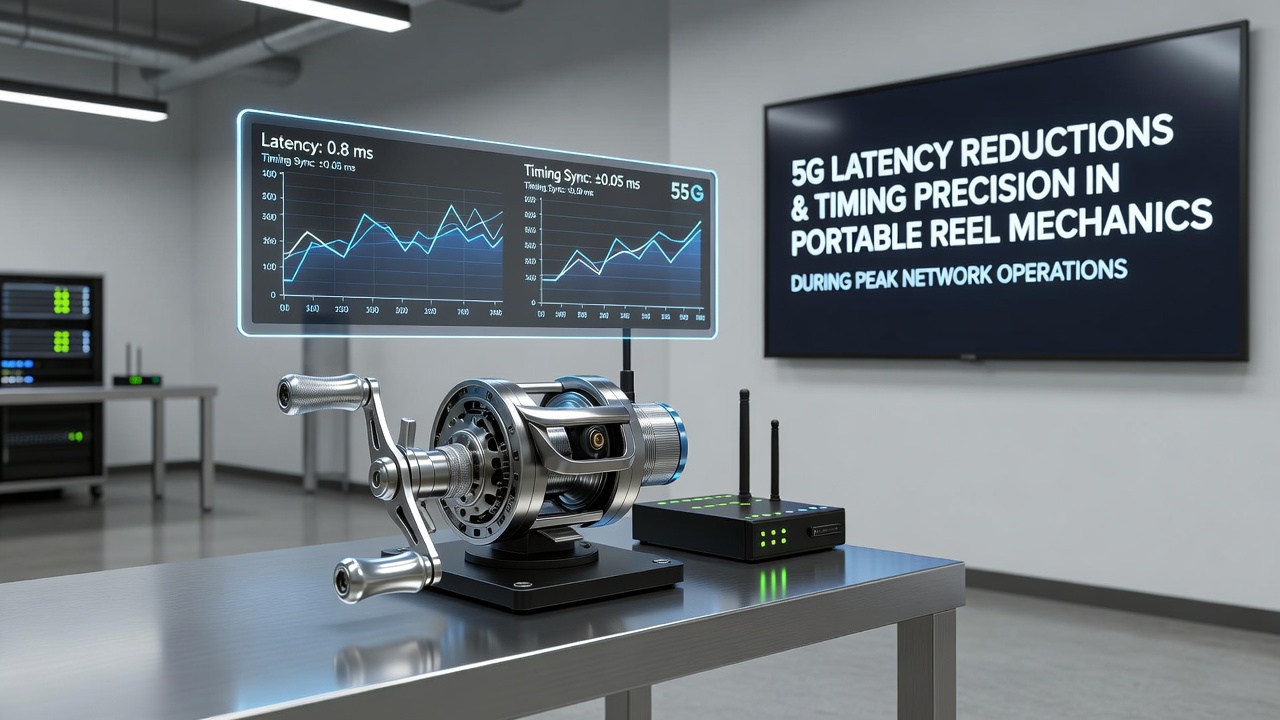
Measurements collected across major metropolitan areas in July 2026 show average 5G latency at 8 to 12 milliseconds during congested periods, compared with 35 to 50 milliseconds recorded on legacy infrastructure under similar loads. These figures come from aggregated reports issued by the Federal Communications Commission and independent testing firms tracking mobile gaming traffic. The tighter response window means reel mechanics receive confirmation packets sooner, which in turn lets client-side rendering engines maintain frame-accurate timing for symbol alignment and payout calculations.
Researchers tracking session logs from multiple operators report that desync events, where a reel appears to stop one position off from the server result, declined by roughly 40 percent after 5G upgrades rolled out in dense corridors. The improvement holds across both Android and iOS devices, although the magnitude varies with handset chipset capabilities and carrier aggregation settings.
Mechanics of Reel Synchronization Under Load
Portable reel systems operate on a client-server model where each spin request travels to a remote random number generator, returns a result, and triggers a corresponding animation sequence. During peak network loads the round-trip time for that exchange directly influences whether the visual reel stops feel instantaneous or slightly delayed. With 5G, the shortened interval reduces the window in which packet jitter can accumulate, resulting in fewer instances of staggered symbol movement or mismatched audio cues.
Engineers at several platform providers have adjusted their timing buffers accordingly, trimming client-side prediction windows from 60 milliseconds down to 25 milliseconds in many titles. This recalibration keeps the displayed reels aligned with authoritative server outcomes while still allowing for minor network variance. Data from operator dashboards indicates that players encounter fewer forced re-sync pauses, which previously interrupted sessions when latency exceeded preset thresholds.
Regional Variations and Regulatory Context
Deployment density affects outcomes. Markets with widespread mid-band spectrum allocation, such as parts of Canada monitored by Innovation, Science and Economic Development Canada, show more uniform latency reductions than regions still transitioning from low-band coverage. In the European Union, the Body of European Regulators for Electronic Communications has published similar comparative data highlighting how carrier aggregation strategies influence reel stability during large-scale events like sports tournaments that drive concurrent gaming traffic.
One study released by academic researchers at the University of Melbourne examined mobile slot sessions across multiple Australian carriers and found that 5G handsets maintained sub-15-millisecond response times 87 percent of the time even when cell sites operated above 80 percent capacity. The same report noted that older devices without 5G modems continued to experience timing drift under identical conditions, underscoring the hardware dependency of the observed precision gains.
Adjustments in Game Design and Backend Systems
Developers have begun modifying reel animation curves to exploit the narrower latency envelope. Easing functions that once stretched across 120 milliseconds now complete in 70 to 80 milliseconds without appearing abrupt. Backend systems, meanwhile, have tightened acknowledgment windows for spin results, which decreases the likelihood of duplicate requests being processed during brief congestion spikes. These changes remain invisible to end users yet produce measurable consistency in payout timing and visual feedback.
Platform operators report that support tickets related to “reel lag” or “spin freeze” dropped noticeably in regions where 5G penetration exceeded 60 percent of active devices. The reduction aligns with internal telemetry showing fewer instances of animation rollback triggered by out-of-order packets.
Conclusion
Reduced latency on 5G networks has produced verifiable shifts in how portable reel mechanics handle timing precision during peak loads. Shorter round-trip times translate into tighter synchronization between server results and client animations, fewer desync events, and adjusted design parameters that take advantage of the improved conditions. Continued spectrum expansion and device upgrades will likely extend these effects across additional markets, while ongoing measurements from regulatory bodies and research institutions provide the data needed to track further refinements in mobile reel performance.