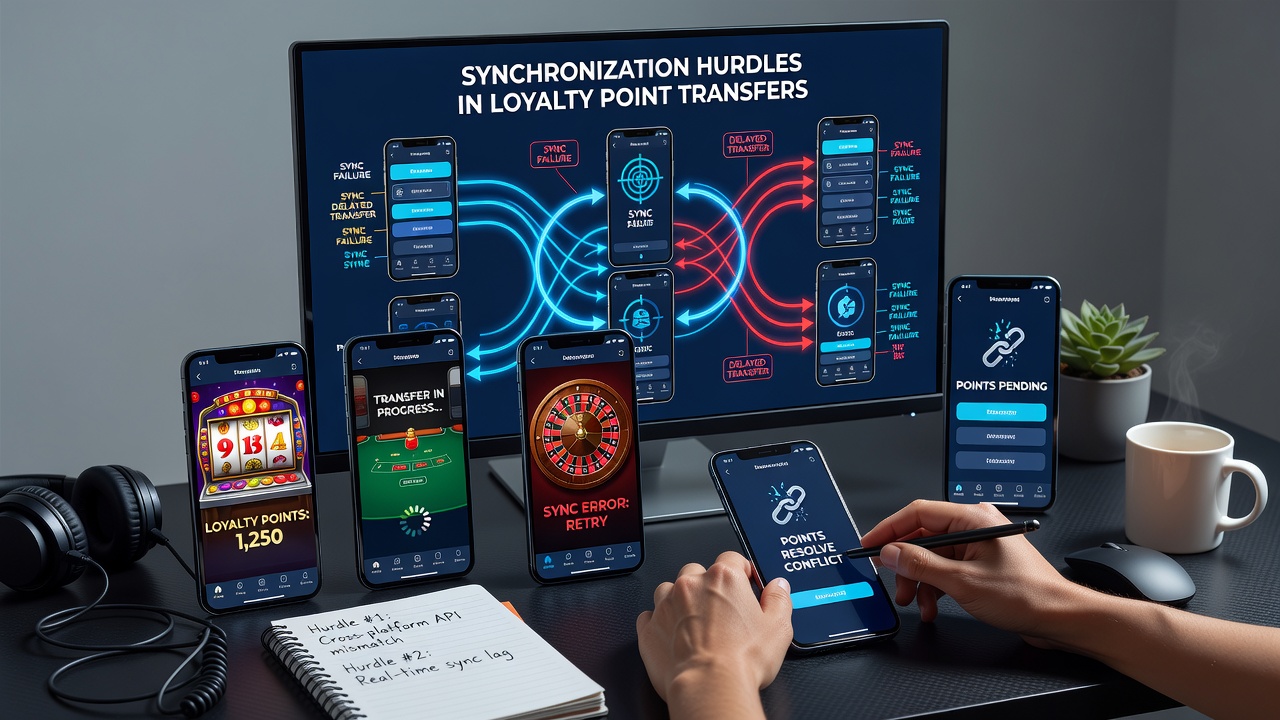
Deciphering Synchronization Hurdles in Loyalty Point Transfers Across Smartphone Gambling Interfaces
Smartphone gambling platforms rely on loyalty point systems to track player activity and deliver rewards, yet transfers between apps often encounter synchronization barriers rooted in operating system differences, network variability, and data protocols that fail to align in real time. Observers note that these issues surface most clearly when users attempt to move points from one interface to another, whether switching between iOS and Android environments or navigating multiple casino applications on a single device. Data from industry reports indicates that such hurdles have persisted through 2025 and into mid-2026, with developers addressing compatibility layers that do not always maintain consistent point ledgers across sessions.
Core Technical Barriers in Point Synchronization
Multiple factors contribute to these synchronization problems, beginning with how each platform stores and updates point data in isolated databases that rarely communicate seamlessly. Researchers at various institutions have documented cases where latency spikes during peak usage hours disrupt the handshake between servers, leaving point balances temporarily mismatched until manual reconciliation occurs. And when users switch networks, from Wi-Fi to cellular connections, the interruption can corrupt transfer requests or duplicate entries, forcing operators to implement rollback mechanisms that add further delays. Experts have observed that Android's fragmented version ecosystem exacerbates these inconsistencies compared to the more uniform iOS updates, creating uneven experiences for players across device types.
Security protocols add another layer of complexity, since encryption standards differ between gambling operators and must comply with regional regulations that evolve independently. In June 2026, updates from gaming oversight bodies in North America highlighted new requirements for encrypted point transfers, yet implementation timelines vary widely among providers, leaving gaps where synchronization fails during cross-app migrations. Those who manage loyalty programs report that API mismatches between legacy systems and newer cloud-based platforms often result in partial transfers, where only a fraction of points appear on the receiving interface after the process completes.
Regional Developments and Platform Responses
Regulatory shifts in different jurisdictions have influenced how operators approach these synchronization challenges, with Canadian authorities emphasizing standardized data exchange formats in recent guidelines. A 2026 report from the Canadian Gaming Association outlines efforts to reduce transfer failures through shared verification tokens, though adoption remains uneven among smaller operators. Meanwhile, Australian research centers have examined similar issues in their local markets, noting that geolocation checks integrated into loyalty systems sometimes interfere with point updates when players cross state lines on mobile networks.
Platform developers continue to test middleware solutions that bridge these gaps, such as unified ledgers that update in near real time across applications. One case involved a major operator integrating blockchain elements to log point movements immutably, which reduced disputes but introduced new computational overhead on older smartphones. Data shows that successful transfers now average under thirty seconds on optimized networks, whereas earlier versions required several minutes of buffering while systems reconciled discrepancies.

Impact on Player Behavior and System Adjustments
Players encounter these hurdles most frequently during promotional events when point redemptions spike, leading to temporary account holds until verification completes. Studies from academic groups focused on digital entertainment have tracked how repeated sync failures prompt users to consolidate activity within single platforms rather than exploring cross-app transfers. Operators respond by deploying background sync services that attempt reconciliation during idle periods, though these tools still struggle with offline scenarios where points accumulate without immediate server acknowledgment.
What's interesting is how device-specific features, such as battery optimization settings on Android, can pause background processes and stall point updates indefinitely until users intervene manually. In response, several interfaces now include explicit prompts to disable such restrictions during loyalty transfers, a step that has improved completion rates according to aggregated usage statistics. European trade organizations have also contributed frameworks for interoperable point systems, encouraging operators to align on common data schemas that minimize these friction points.
Future Outlook for Seamless Transfers
Advances in 5G infrastructure and edge computing offer potential pathways to smoother synchronization, allowing point ledgers to update across distributed nodes with reduced latency. Observers note that operators testing these technologies in pilot programs report fewer mismatches, particularly when handling high-volume transfers during live events. Yet full resolution depends on broader industry coordination, including standardized APIs that respect both privacy rules and competitive boundaries.
Conclusion
Synchronization hurdles in loyalty point transfers across smartphone gambling interfaces stem from a combination of technical, regulatory, and infrastructural elements that continue to evolve. As platforms integrate newer connectivity standards and refine their data handling practices, transfer reliability has shown measurable gains through 2026. Continued collaboration among developers, regulators, and researchers remains essential to address remaining inconsistencies and support fluid point movement between mobile environments.