Charting the Development of Exclusive In-App Tournament Formats for Slot Players on Portable Devices
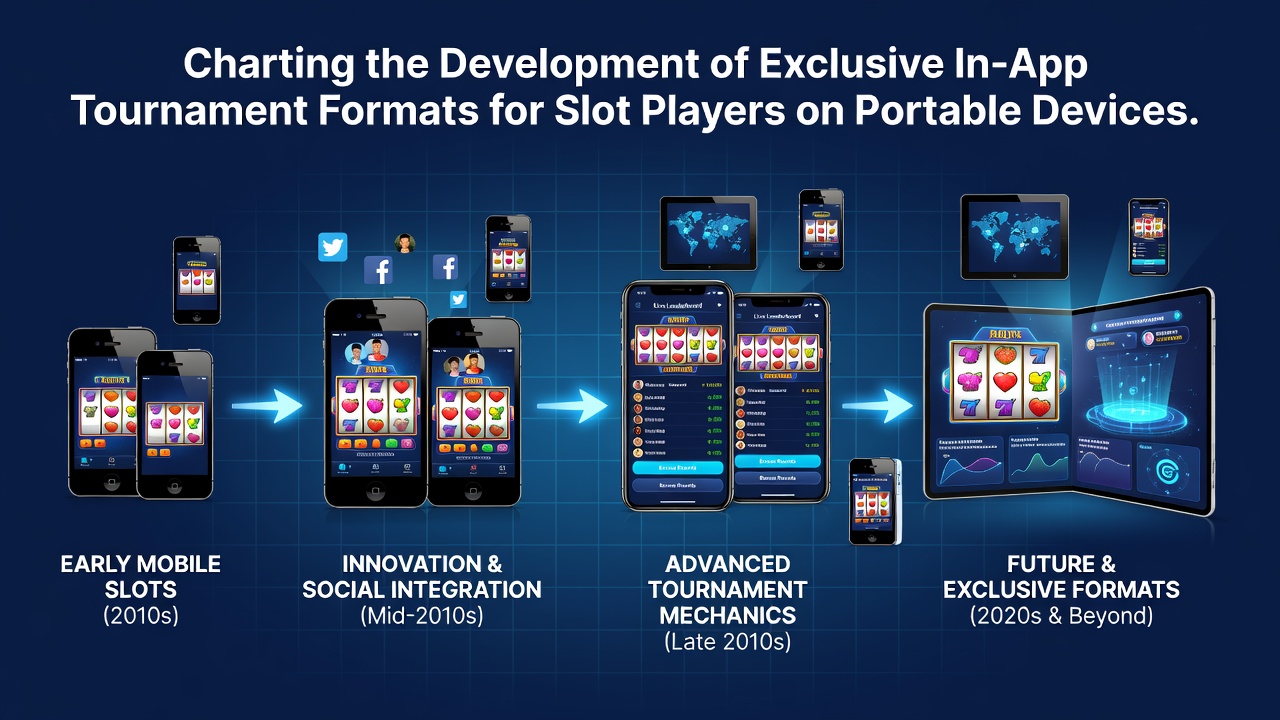
Slot tournaments on portable devices began as straightforward leaderboard competitions in the late 2000s when mobile apps first integrated basic multiplayer features, and developers tracked player scores through centralized servers that updated in real time across smartphones and tablets. Those early systems relied on simple score submissions at the end of timed sessions, yet they laid groundwork for more interactive formats that later emerged as data speeds improved and device processors handled simultaneous connections without lag.
By the mid-2010s, in-app tournaments incorporated live leaderboards that refreshed every few seconds, allowing participants to adjust their strategies mid-round while competing against others in the same virtual lobby. Data from industry reports shows that participation rates climbed as these updates reduced the delay between spins and visible rankings, and developers added entry fees that funded prize pools distributed automatically through the app at tournament close.
Expansion Through Mobile Network Advances
Network upgrades played a central role in shaping tournament structures, since 4G and early 5G connections enabled continuous data streams that supported larger player pools without disconnects during peak hours. Observers note that developers responded by introducing bracket-style eliminations where lower-scoring participants dropped out after set intervals, and this format spread because it kept engagement high among remaining competitors who received push notifications about their advancing status. Figures from regulatory filings in Nevada reveal steady growth in mobile tournament entries between 2018 and 2022, coinciding with wider adoption of these elimination mechanics across multiple state-licensed platforms.
Exclusive Formats Taking Shape in Recent Years
Exclusive in-app formats emerged around 2024 when operators began segmenting tournaments by device type and player history, creating invitation-only events that rewarded consistent mobile users with separate prize structures unavailable on desktop versions. These formats often featured progressive multipliers that increased based on consecutive wins within the app, and synchronization across sessions allowed players to resume unfinished rounds after brief interruptions. Research indicates that such segmentation helped operators manage server loads during high-traffic periods while maintaining competitive integrity through encrypted session tokens.
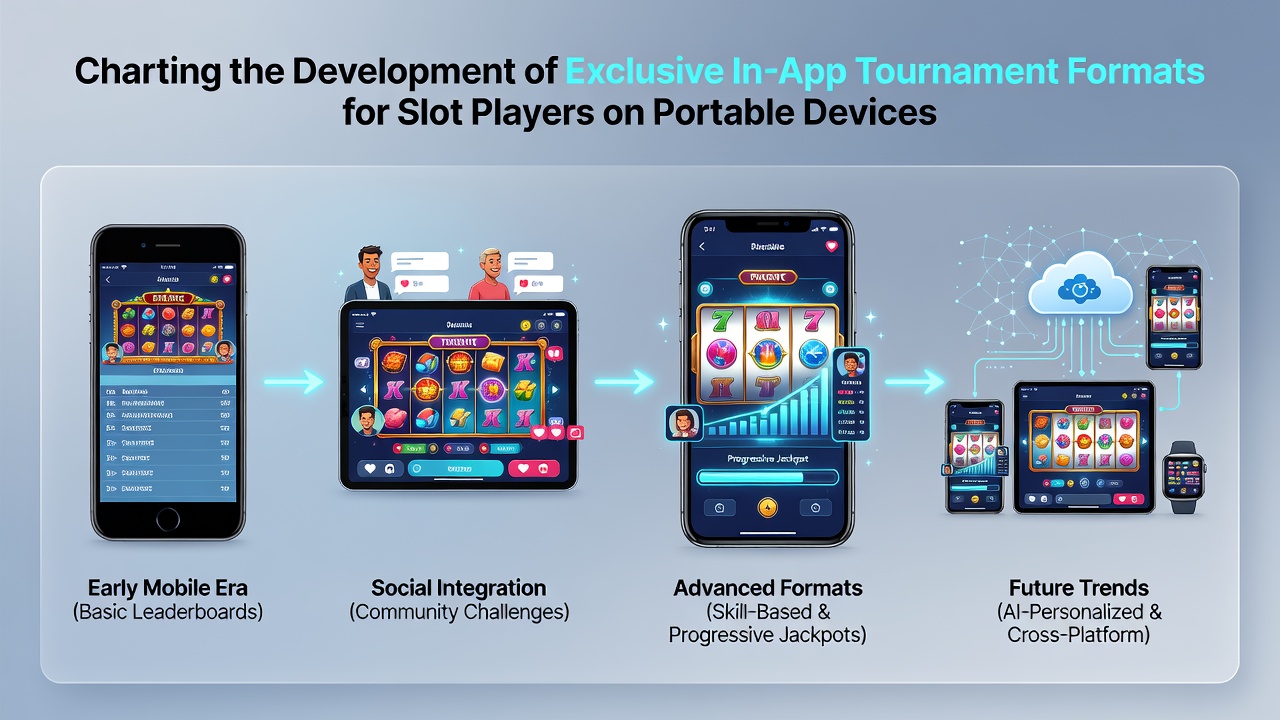
In August 2026, several platforms rolled out hybrid tournament models that combined slot spins with mini-challenges such as bonus round predictions, all contained within the same app interface on portable devices. Those models drew from earlier experiments in cross-platform loyalty systems, yet they remained mobile-exclusive to leverage touch-screen gestures for faster decision-making during timed segments. According to a report from the Nevada Gaming Control Board, mobile tournament revenue in the state rose notably during the first half of 2026, reflecting broader adoption of these integrated challenge layers.
Technical Elements Driving Format Innovation
Backend infrastructure evolved to support randomized seeding that prevented repeat matchups among top performers, and this adjustment came after operators analyzed participation logs showing patterns of repeated pairings that reduced perceived fairness. Developers integrated geolocation checks that verified player locations at entry and at intervals throughout the event, ensuring compliance with regional rules while allowing seamless transitions between Wi-Fi and cellular data. Studies from Canadian research groups have documented how these verification steps reduced unauthorized entries without lengthening load times on mid-range devices.
Another development involved adaptive difficulty scaling, where the game adjusted reel speeds or bonus frequencies based on the current standings, and this kept lower-ranked players competitive until later stages. Data collected by the Canadian Gaming Association indicates that tournaments incorporating such scaling retained participants longer than static formats, particularly among users on tablets with larger screens that displayed additional status information.
Player Participation Patterns and Platform Responses
Participation data reveals distinct daily peaks aligned with commute times and evening hours, prompting operators to schedule shorter tournaments during those windows and longer ones overnight. Push systems notify eligible users when new events match their historical play windows, and this automation increased repeat entries without manual promotion. Those who've examined app analytics note that exclusive mobile tournaments often attract different demographics than traditional slot play, with higher proportions of users aged 25 to 40 who engage through social sharing features built into the app.
Conclusion
The progression of exclusive in-app tournament formats for slot players on portable devices reflects ongoing refinements in technology, regulation, and user interface design. As platforms continue to test new mechanics in 2026 and beyond, the focus remains on maintaining secure, engaging experiences that operate reliably across varied network conditions and device capabilities.